Every year* I attempt (with varying degrees of success and effort) to watch as many of that year’s Oscar nominees as possible. For the past few years* I’ve posted reviews of these movies here on this blog. At some point before the awards ceremony, I usually write up some sort of over-analysis and maybe some predictions, but we’ll see if I run out of steam before then. In the meantime, today we cover…
*Except 2022, when I was too burned out from 2021’s binge to give a crap.
American Fiction
[5 nominations for best picture, actor (Jeffrey Wright), supporting actor (Sterling K. Brown), adapted screenplay, score]
IS IT SALTBURN? No.
I was pretty excited for this movie, and even turned it into a rare Friday night dinner-and-a-movie date with my spouse. “This one looks promising!” I probably said. Not only did it look clever and have a whole bunch of the best nominations (picture, script, AND double-acting? Hell’s yeah!), but it also just happened to be written and directed by one of my husband’s college classmates, which made us want to like it even more.
It was only after we sank into our theatre seats and the previews were ending that I suddenly remembered, “Oh wait… I hate stories about writers! Duh oh!” Movies about the movies… books about writers… movies (written by writers of course) about writers, etc. Hate ’em. There are exceptions, of course. Singing in the Rain was a fantastic film about movies, and see my positive review of Can You Ever Forgive Me? But in general, I find them lazy and masturbatory. The worst are movies about writers who have writers’ block, or movies where the writer is admired by others for being such a gifted writer. Ugh. Buddy, if your writer’s block is so bad that you can’t think of anything to write about except for how you have nothing to write about… maybe writing isn’t for you? I have a billion stories in my head I’ll never get around to penning (ahem, go buy some of them.) None of them are “Oh woe is me, nobody loves my super genius,” or “Oh woe is me, I can’t think of anything to say.” With that in mind, I tried my best to sit down and enjoy the film anyway. I hoped beyond hope that this movie would be one of the exceptions. But was it?
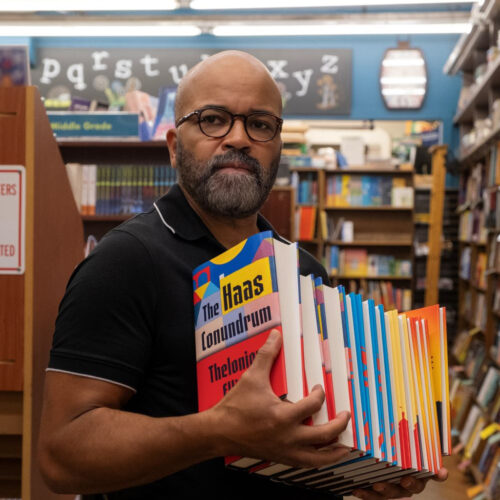
Yes and no. I experiences this movie as two entirely separate movies twisted together. The first movie, the movie I expected from the trailers, was the movie that I loved. It was the movie I wish we had more of. This was the movie about an author who is sick of the racism he faces in his chosen profession (literature), tries to protest the racism by producing art that exemplifies the stereotype-riddled garbage, has that plan backfire because consumers are idiots who gobble up garbage, and then finds himself falling deeper and deeper into his hypocritical ruse by actually profiting. The funniest, most thought-provoking, and most creative moments are all in this sub-movie. I was dying when Monk (our protagonist) moved all his books from the African American Literature section to the general Literature section in a bookstore. Or when he tried to dress “street” by wearing a fitted plain T-shirt instead of his usual button-ups and polos. And, of course, every time he talked with a white person who mentioned “diversity” or finding something “offensive” I cringed so hard (and then thanked the film for moving along so I don’t go into a disastrous tailspin of self-reflection.)
I really thought the film would take off when we experienced the one scene where he actually writes his protest book (just one scene- he churned his draft out in one drunken night). As he starts dreaming up a story that hits on every derogatory black trope, visualizations of his characters appear in the room with him. They turn to him every now and then and ask what they should say now. They debate what verbiage would be appropriate. Etc. It was perfect filmmaking, a slightly trippy bit of storytelling where we get to crawl into our protagonist’s brain, and see firsthand just how much he disdains the material he is satirizing. I was hoping for the return of these visualized characters, or at least for more crazy scenes to help heighten the absurdity. But that’s as crazy as it got. Until… the ending. Which I’ll discuss towards the end of this review.
So that was movie one. What was movie two? A snoozefest, that’s what. And the problem is that most of the movie was movie two (or at least it felt that way to me.) Movie two is about an author (who is lucky enough to make a full-time living as a novelist and lit professor, the lucky sod!) who is sad because not enough people are publishing or buying his books. Boo hoo. He visits his family, and they have some family drama (sister dies, mom gets dementia, brother is an estranged drug-addled mess who is recently divorced because he’s finally come out of the closet, family maid gets married.) He meets an absolutely gorgeous, doting, wonderful neighbor who fawns over him because she’s read his books and OMG she just loves his creative novel-writing brain! (She also somehow affords a beach house on a noble public defender’s paltry salary, but we ignore that because her only real function here is “generic love interest.”) That’s pretty much it. Now, Monk’s brother was a legit interesting character, but honestly he should have just had his own movie. There was nothing new in any of these other stories, and nothing new in how they were told. It was the exact same boring family drama movie we’ve seen a billion times before. BUT, this time we made sure to make it about an author. Did I mention I hate stories about authors? Ugh. This boring author-visits-family story overpowered the rest of the movie for me. Which is a huge shame.
Now, as I realized that review was complaint that I only liked the black-focused parts of the movie, I wondered whether that’s the exact point this film is trying to make. In other words, and I part of the problem? I’m a white person who liked the part of the story that was specifically about being black; I did not like the part of the story that could have been about anyone regardless of being black. Obviously I want to say “No, I am innocent!” But maybe not. Then I started to think, “Maybe they made the non-race-related part of the story boring on purpose? Specifically to elicit this exact response of self-reflection from the viewers?” And… I dunno. It just didn’t feel intentional. Why would a filmmaker go out of their way to make their movie boring? But on the other hand, if someone is capable enough to come up with the clever storylines over in the good half of the movie, then surely they’re capable enough to realize the rest of the film isn’t as clever?
Back in the film, our two movies are of course intertwined. It is towards the end of the film that our boring storyline finally engaged me, largely because Movie One reaches right across the table and slaps Movie Two in the face. In one of my favorite Movie Two scenes, Monk is at his doting love interest’s house and notices that she has a copy of his fake book- the hugely successful racist one he wrote as a joke. Monk is in shock that someone who appreciated his absolute brilliance could ALSO appreciate this garbage! Why doesn’t everyone else like and dislike the same stuff I do?!” Monk is basically screaming at the world. And he basically dumps her right there for being a big dummy who likes dumb things. Meanwhile, over in Movie One, Monk is on a judging committee for a prestigious book award where his own fake book (published under a pen name) is being considered for the top prize. His nemesis, the erudite black author of the exact awful novel he was spoofing (titled We Lives in Da’ Ghetto), is the only other person on the committee who hates the parody novel. She calls it out for every fault that Monk intentionally included, and Monk’s head explodes at realizing his sell-out nemesis isn’t a villain after all, and might be a kindred spirit. When Monk then asks her how her own book is different, she issues a beat-down, suggesting there is room for more voices and stories than just the ones Monk personally deems acceptable and unacceptable. I love both of these scenes.
What I don’t love, is that I can’t tell whether Monk himself took away the lesson I thought he should have from them. When his love interest admitted that she liked Monk’s fake book, maybe Monk should have realized that maybe it’s not because she’s an idiot; maybe he should have taken the compliment and realized that he did a good job writing this book, even if it’s not his usual genre. Like dude, if this many people love the shit out of your book… maybe that’s because it’s actually a good book? After all, plenty of people write shitty books that hit on all the tropes he hit on, but they don’t get mega book deals. Meanwhile in his conversation with the other author, he couldn’t acknowledge that maybe, just maybe, this was a person who totally got what he was doing. She was able to recognize each of his tropes. Again, he did a good job! He wrote a book that both appealed the idiot masses’ need for garbage literature, while simultaneously eliciting the response he wanted from the true literature connoisseur.
Or… maybe I’m reading way too much into this, and totally missing the point. That’s highly likely. I spent a lot of the film thinking about how I’m just unfamiliar with the literature about which this story was complaining. I’m assuming it exists, or else someone wouldn’t have written a book about it. But I have seen what I believe to be the movie equivalents, and based on an interview I read with the film’s (W&M alum) director, he saw the equivalency in filmmaking as well. In the movie, our love interest loves both the not-race-baseed art, AND the race-based art. And in the interview, Jefferson admits to enjoying Django Unchained and Boyz n the Hood (he just mourns the absence of non-race-based art by black artists.) He made the film to expose the absurdity of how hard it is to be a black artist trying to tell any stories that are not about being black. And he spent half the movie doing just that. But I dunno… I feel like he could have done so much more. He says this himself in the interview, “When people see the movie and say, ‘All this is exaggerated, right?’ Not really. It’s usually a lot worse.” So if the reality is a lot worse… why not make it worse in the film??? Why hold back? Why waste half the movie depicting a guy trying to get his mom into a nursing home? I just don’t get it. The best I can come up with is that we need to see exactly how mundane and normal his real life is, so that we have a strong contrast with the troubling depictions we typically see of black characters. But dang, dude, the balance is off here. Way off. (For me, anyway). Off enough that this film receives a “No” on the Saltburn Scale, whereas Movie One kicked up a notch would have received a “Yes.”
SPOILER ALERT: I AM ABOUT TO DISCUSS THE ENDING!
I AM going to end this review on a (very!) positive note: I absolutely LOVED the ending. It was great! But for real, stop reading right now if you don’t want it ruined…
…
…
…
…
Okay, are they gone? So, in the end Monk’s fake book predictably gets announced as the winner of the book award. And just as Monk is at the podium about to speak, the screen cuts to black. And we have no idea what happens!!! Did he tell everyone?! Did he keep living the lie?? Who knows?! The build-up to this moment was so effective that when the screen cut to black, people in my theatre screamed out! “NO!!!” “WHAT?!” I myself also felt some real emotions there, of total shock. And then, after a few moments of black screen… the film continued, and we see Monk pitching a movie idea to a white director who poo-poos the idea of the cut-to-black. He claims we need a real ending. So Monk pitches a rom-com type ending where he runs to find the girl and win her back. That gets nixed. Then he comes up with one that is super over-the-top and leans right back into the racist tropes he put in his original book: he had law enforcement come in and gun him down right at the podium. That’s the one! announces the director. Thus Monk wind up continuing to profit from his ruse, even while in the act of trying to get out from under his ruse. It was awesome, if for no other reason than it allowed Movie One to gobble up Movie Two whole.
[PS: One of Monk’s “real” books is titled The Haas Conundrum. I would love to know if this title is a reference to anything, and where it came from. My husband (and therefore the writer/director) had a classmate named Haas, and I went “Oh! Do you think it’s named after him!” My husband is certain the answer is no. If anyone has any intel on this, please let me know!]
 Helga without the H
One thought on “2024 Oscar Reviews: American Fiction”