I did a brief trip across the pond this past week, and managed to squeeze in a whopping 3 London museums in under 2 days! First up: The Churchill War Rooms
I didn’t know much about the Churchill War Rooms before this trip, and was very pleasantly surprised by how much there was to see and learn. I think it’s the name of the attraction that made me completely miss in my estimate of scale. It’s named after a single dude, and refers to this one dude’s rooms. I figured, if you’re counting in “rooms,” especially just one dude’s rooms, we were gearing up to see like 2 or maybe 3 rooms. Like, maybe a conference room, and like an office next door, and that’s it. If you’re familiar with British WW2 history, you’re probably shaking your head at my ignorance. But for those who are as clueless as I was 3 days ago, here’s the deal: This wasn’t just Churchill’s bunker room. This was an entire underground command center employing hundreds of people at a time. Hundreds! The idea was that Hitler might try blowing up London, which means he might blow up all the government buildings, which means that the operation of the government had to go underground (fun note: NOT down into a bomb-proof bunker. Just a regular basement that was totally capable of being blown up, though it seems they didn’t tell most employees about that detail.) And if you’ve ever been involved with operating a government, then you know that requires a lot of people. And people require a lot of space. Each one of those people and those spaces had its own story, and each one of those stories was fascinating.
The tour is conducted primarily as an audio tour, and begins with a small conference room for Churchill’s cabinet. I kinda figured that would be about it. “Neat! History happened right here! I’m so glad we stopped by!” I thought. But no, no no, that was only the beginning. There was so much more.

We moved on to learn about the various people who actually lived down in the basement in stuffy dark little dorm rooms. Mrs. Churchill had her own room, which featured a comfy chair (the only comfy chair I spotted the whole time.) Churchill had a bedroom but, like many of the other workers who hated being in the basement, he barely ever slept there (though he lied to his wife and said he was doing so) and instead risked sleeping above ground. Churchill’s own grand reception room, where he had his desk and where he greeted dignitaries like freaking Dwight Eisenhower, also featured his sad little twin bed, complete with chamber pot. This bedroom/ oval office combo was directly next door to the map room, which was the busiest around-the-clock nerve center of the whole operation. So weird. Image being the officials putting push pins into a wall the maintain the most up to date information about the conflict, and the prime minister is napping in a kiddie bed a couple feet away. Switchboard operators slept in the same room as the switchboard so they can operate it around the clock. There was a kitchen down there for Churchill’s private cook (Churchill got the same shitty rations as everyone else, but was lucky enough to have a chef who was renowned for making nothing taste like everything.) To make the totally-not-bomb-proof “bunker” slightly closer to being a read bunker, they covered the whole thing with a concrete slab (which was visible at points), and also filled in entire neighboring rooms with concrete (the concrete room was later drilled through to create a tunnel so tourists like us could more easily visit.) The entire thing was totally wild, and most of it was frozen in time just as it had been left after WW2, making it all the more impactful.
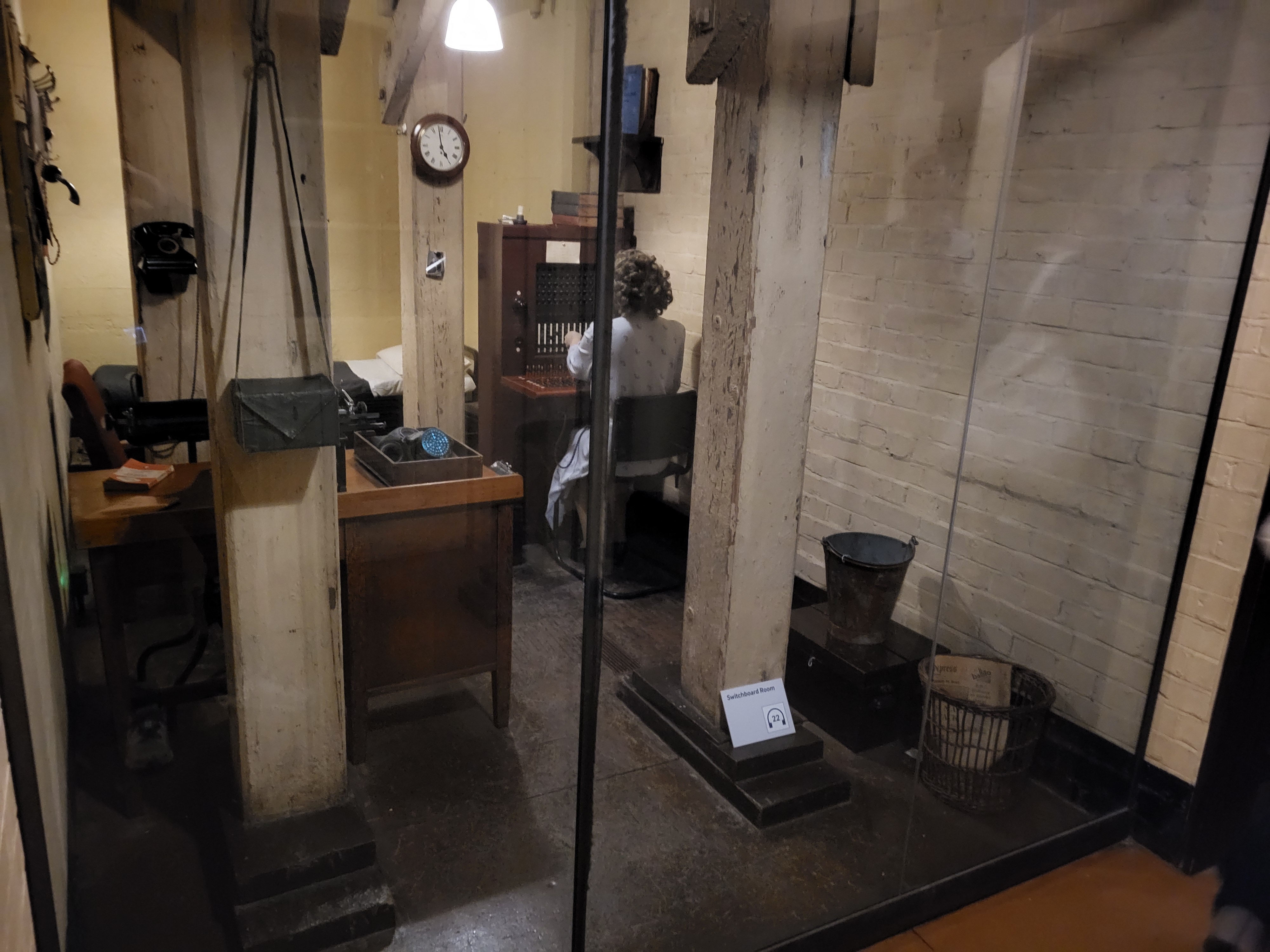
Just the rooms alone would have been well worth the visit. But there was even more to see and do. One room featured exhibits about life for the employees, including recorded interviews with several of them. The interviews was exceptionally fascinating, because they gave insight into the human mind and memory. The interviewees were all asked the same questions (for example “what was it like living underground?”) and then one person would talk about how good the air conditioning must have been since there were hundreds of people in there and she doesn’t remember any issues with air quality. The next person said “OMG there was NO air circulation whatsoever. We couldn’t freaking breathe!” And then the next person says “They put up white fabric over the air con as a filter and it had to be replaced every 2 days because it became opaque with soot and crap. And it made me hella sick.” I could have spent a much longer time sitting through all the interviews, but didn’t because there was more to get to, and I wanted to allow other visitors a chance to listen. Later, in another room, there was a volunteer who gave a really fascinating speech about the history of bombings in London that was super educational and very well presented. (Folks listening at the same time as us got a bonus lecture from my husband, who gave a surprisingly well-received speech of his own about his grandfather’s role in the war.)
Another thing I hadn’t realized before going in was that this attraction is actually TWO museums in one. First, of course, are the war rooms themselves, as described above. But there’s also an entirely second museum in the middle all about Winston Churchill himself. I’ll be honest here; I wasn’t into this part. Maybe I would have been into it more if I had expected to encounter it, but I hadn’t. I only had one full day in London to cram in all the sight-seeing I could, and so I was selective about how I spent my time. Was I up for an hour or 2 to see the war rooms, something which I cannot see anywhere else in the entire world? Absolutely. Was I up for an extra hour or two to stand in a dark basement (especially on a super rare perfect-weather day) reading all the same Churchill content I could read on Wikipedia? No. I hated this part. I hated this part so much that, when I realized what was going on, I walked back to where my husband was and told him to please NOT go into the next room. My husband reads every single word on every single display when we go to museums. It’s admirable that he has the interest, attention span, and lack of back pain to do this. And it would be fine if he had the time. But he didn’t. When I saw the sheer volume of readable content in that Churchill museum section, I knew we’d be stuck in that basement for the duration of our vacation. I begged him to not go in at all. He said he’d just do a quick sweep and would be “right back.” He timed himself and claims it was only 30 minutes. It felt like more. ANYWAY, to be clear, none of this is to say that there was anything actually wrong with the Churchill museum. And there’s nothing wrong with my husband being interested. But for me, personally, I just wasn’t very into it. I much preferred to focus my time and energy on the actual war rooms themselves, and the bonus museum felt more like an interruption than a valuable supplement.
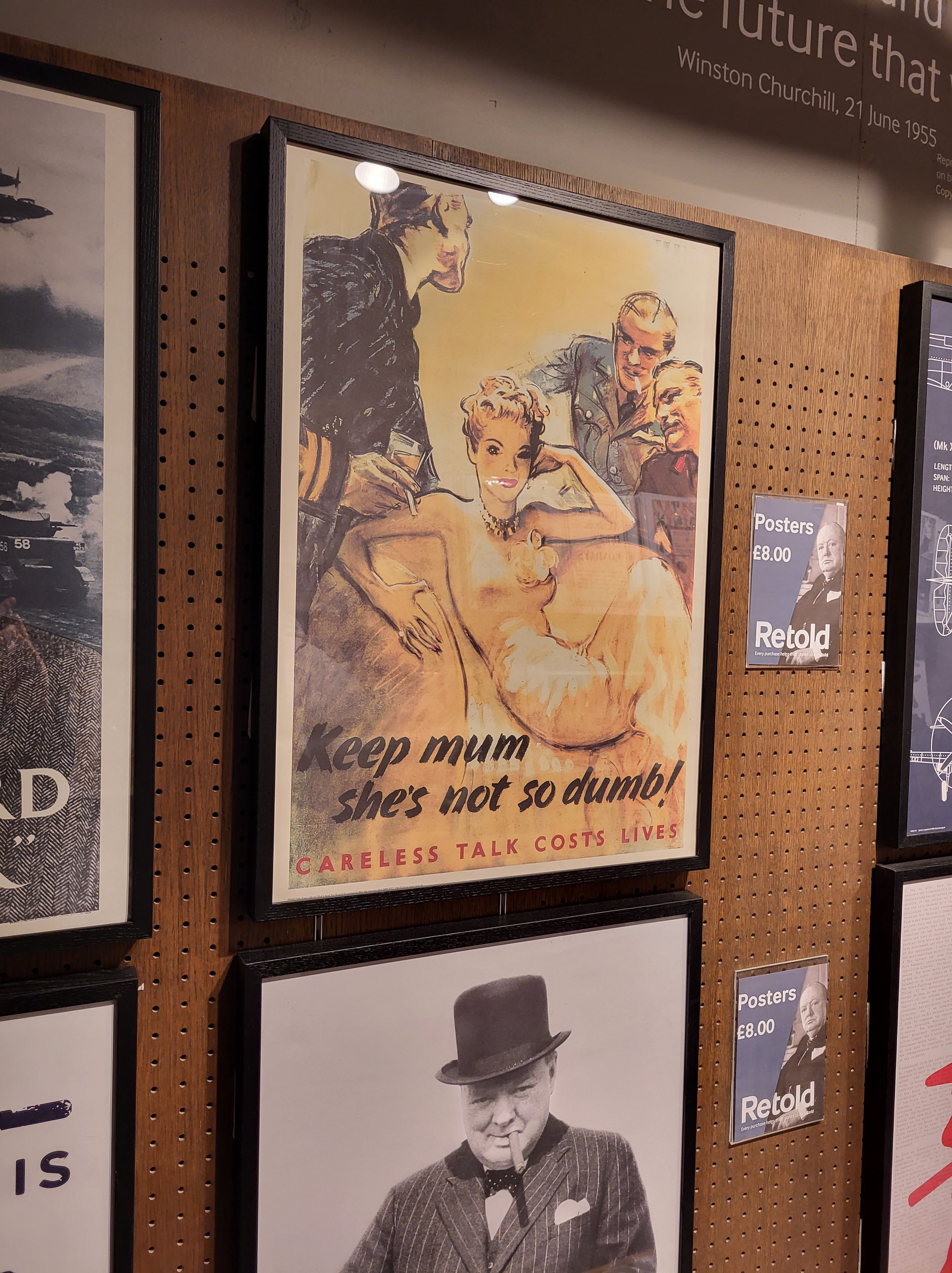
I asked my husband which of our 3 London museums he liked the best, and he couldn’t quite answer because they were all great, but also all so different. But then I asked, if you could only do ONE of the three, which would he select? And he and I both agreed, it was this one. While our other museums were great (keep an eye out for those museum reviews next), they lacked the uniqueness and the historic relevance of the war rooms. Five stars. Would HIGHLY recommend for any/all London visitors. (BONUS: The gift shop had some really great prints and postcards for sale with very British WW2 posters.)
 Helga without the H