I was sitting in my church parking lot celebrating Octoberfest one sunny afternoon when a friend asked me how my museum -visiting New Year’s Resolution was going. “Oof, not well!” I admitted with shame. I started the year so strong, but hadn’t visiting a museum in a few months, dropping me way behind my goal. But this friend is someone who posts about all the cool places she explores around the DC area, so I asked her for suggestions. That’s how I learned about a little place called the Josiah Henson Museum. The most attractive aspects to me in that moment were the fact that is was very close by and on my way home, it was small enough I would only need an hour or two, it was open for another 2 hours, and I had a hour or two free at the moment. In other words, it was just plain convenient. Sounds like a win!
But oh man, am I glad I stopped in! I’ve been hitting up several smaller, lesser-known museums this year, and usually they’re pretty much fine but nothing too mind-blowing. But this place was certainly small-but-mighty; the epitome of what a small museum could and should be. Bravo!
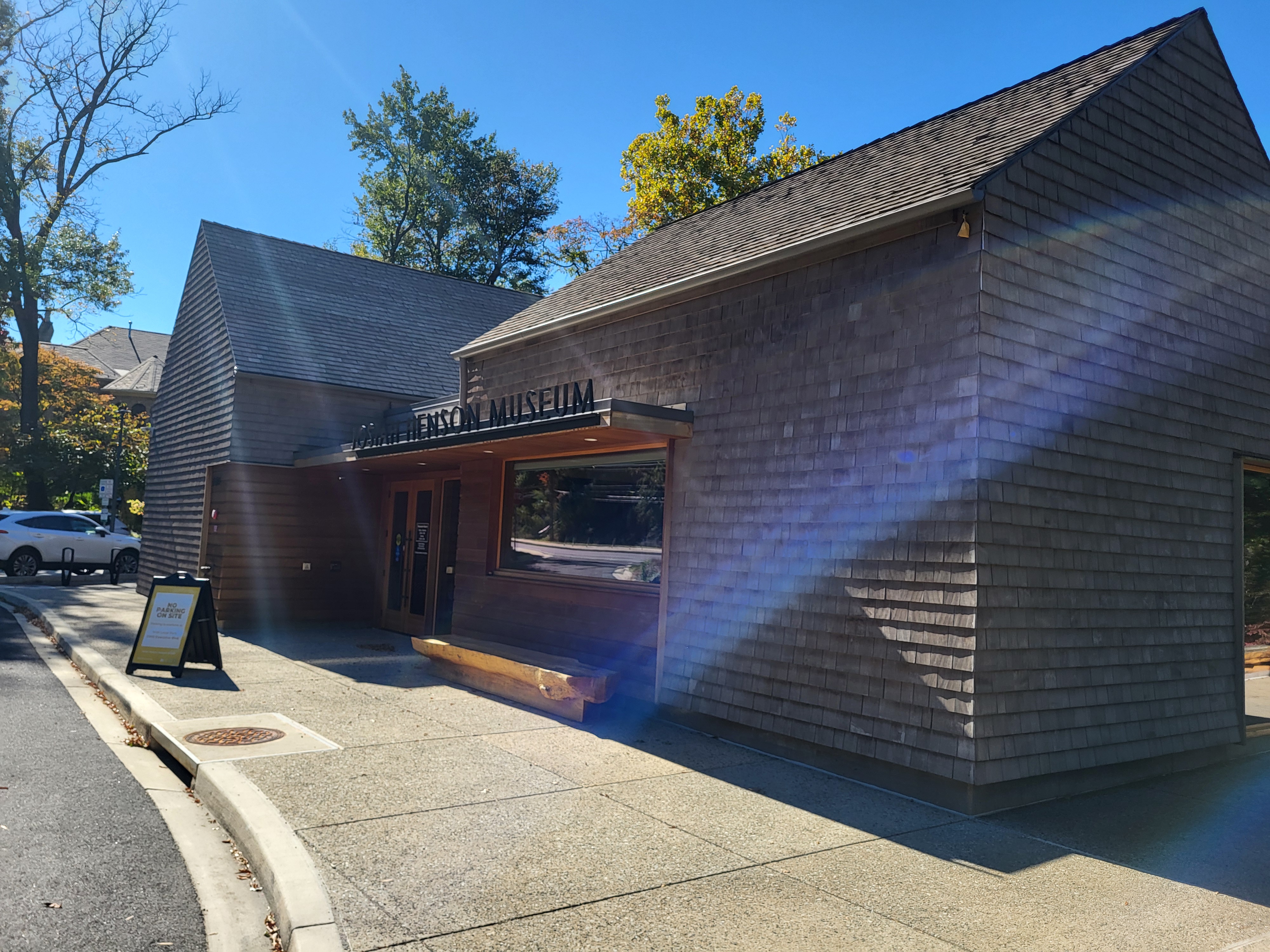
The Josiah Henson museum is, unsurprisingly, the former home of a dude named Josiah Henson. Don’t worry, I didn’t know who he was before my visit, either. But I sure do now! Henson was famous back in his time for being the leading inspiration for Harriet Beecher Stowe’s titular character in Uncle Tom’s Cabin. He was an enslaved man who escaped with his family to Canada, helped other people escape after him, then wrote an autobiography that caught Beecher Stowe’s attention. That’s the short version.
Henson spent his entire youth enslaved in Montgomery County, Maryland, before moving to his douchebag enslaver’s brother’s property in Kentucky. Most of the Maryland farm became a subdivision in the early 19th century, but the original farmhouse remained intact. When it came up for sale a few years (15 I think?) ago, the county realized the historic significance of the site and purchased it. The museum opened its doors in 2020, and man does it still have that New Museum Smell!
The museum is split over 2 buildings: the newly-built visitors center (which contains bathrooms, the gift shop, and a small theatre that plays an introductory video,) and the historic farmhouse (which houses the actual displays.) It’s such a freaking awesome fuck-you to those slave-owning bastards that their house, years later, becomes an altar dedicated to one of their slaves who went on to become more famous and powerful than they could ever dream. The justice there is just… mwah! Chef’s kiss! Take THAT you fucking fucks!!! The property isn’t expansive; it’s not even big enough for a parking lot! You have to park at a nearby aquatics center and walk over (sidenote: there were a lot of really weird characters in the parking lot, and I have no idea why. The aquatics center was closed for renovations or something, but there were still cars driving around and parking. Why??? What were they all doing? I know they weren’t going to the museum, cuz there were only like 3 of us there.)
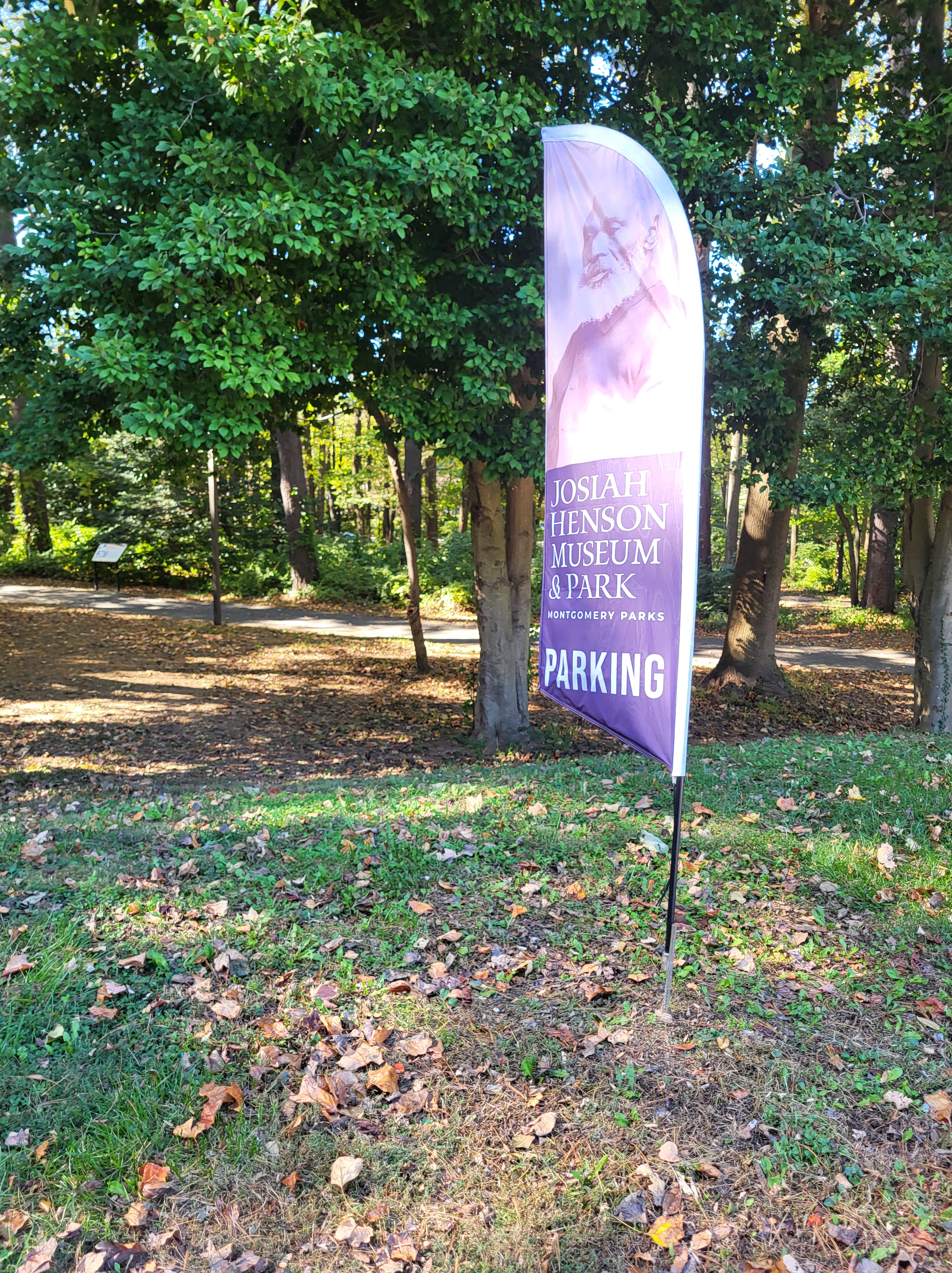
Sorry, I got sidetracked… the point is, the property isn’t large, but it is big enough to include a nice rolling walkway with displays along the way, as well as an archeological dig site. They’ve found tons and tons of artifacts onsite, and as of my visit they were still actively digging up the remains of what was the overseer’s house. Interestingly enough, Henson himself may have lived in that house, since he was the overseer.
If you’re thinking “Hey wait… wasn’t he a slave? Weren’t overseer’s usually evil white dudes? Was Henson overseeing other black people?! What an Uncle Tom!” Well, you’re not far off. And then you might be thinking, “Wait, so why should we be celebrating this guy?” Because, idiot, that’s where he started, but it’s not where he ended. Hanson knew no other life outside of his own life in bondage, but he was an extremely bright, strong, and capable guy. He excelled at everything he did, which, at that point, was slave work. His talents and abilities were obvious to everyone around him, including his enslaver, and so he soon got basically promoted to being his enslaver’s right-hand-man. The good new is that, as overseer, he could do his best to help out the other enslaved people on the farm by doing things like stealing the farmer’s livestock to better feed all the workers. The bad news is that the farmer was a useless drunk and Henson wound up having to drag his drunken boss out of the bar, defend him in bar fights, etc. Eventually, to escape his debts, the farmer asked Henson to transport all of the enslaved people to Kentucky, which Henson actually did! They traveled unsupervised through free states and could have easily (and legally?) escaped, but Henson saw it as a point of honor to respect the promise he’d made, and so they continued to Kentucky. My head exploded when I first heard this part of the story, but it made more sense to me later when I read Henson’s autobiography (conveniently for sale in the gift shop.)
I won’t go through his entire story, but the good news is that, obviously, Henson eventually got wise to how messed up this whole slavery thing was, and his decision to not free everyone during that trip was (understandably) the biggest regret of his life. He went through some crazy messed up situations along the way, and eventually escaped to Canada, helped over 100 other people escape to freedom, and became a leader of the black community in Canada. His entire story is wild, and every time I learned another piece of it I was thinking, “Oh my God, I’ve got to read this guy’s book!” Which, of course, I went ahead and did. The book wasn’t really much more in-depth than the museum itself, because the book was extremely short, but it was interesting to hear to stories and interpretations in Henson’s own voice. But back to the museum itself:
I started in the visitors center, where I watched the intro video. It was 12 minutes long, and really well done. It did a good job distilling the relevant American history, the basic timeline of Henson’s life, and the impact he made in an extremely short runtime. I was particularly impressed by the illustrations from the video, and was happy to see the same artist’s work on the displays in the museum itself. It turns out the art was done by Kyle Baker, a super famous comic book artist (or at least I was told her is super famous; I don’t know anything about comics and just spent 30 minutes trying to find the guy’s name so I can credit him.) Here’s a sample of his art from later on in the farmhouse:
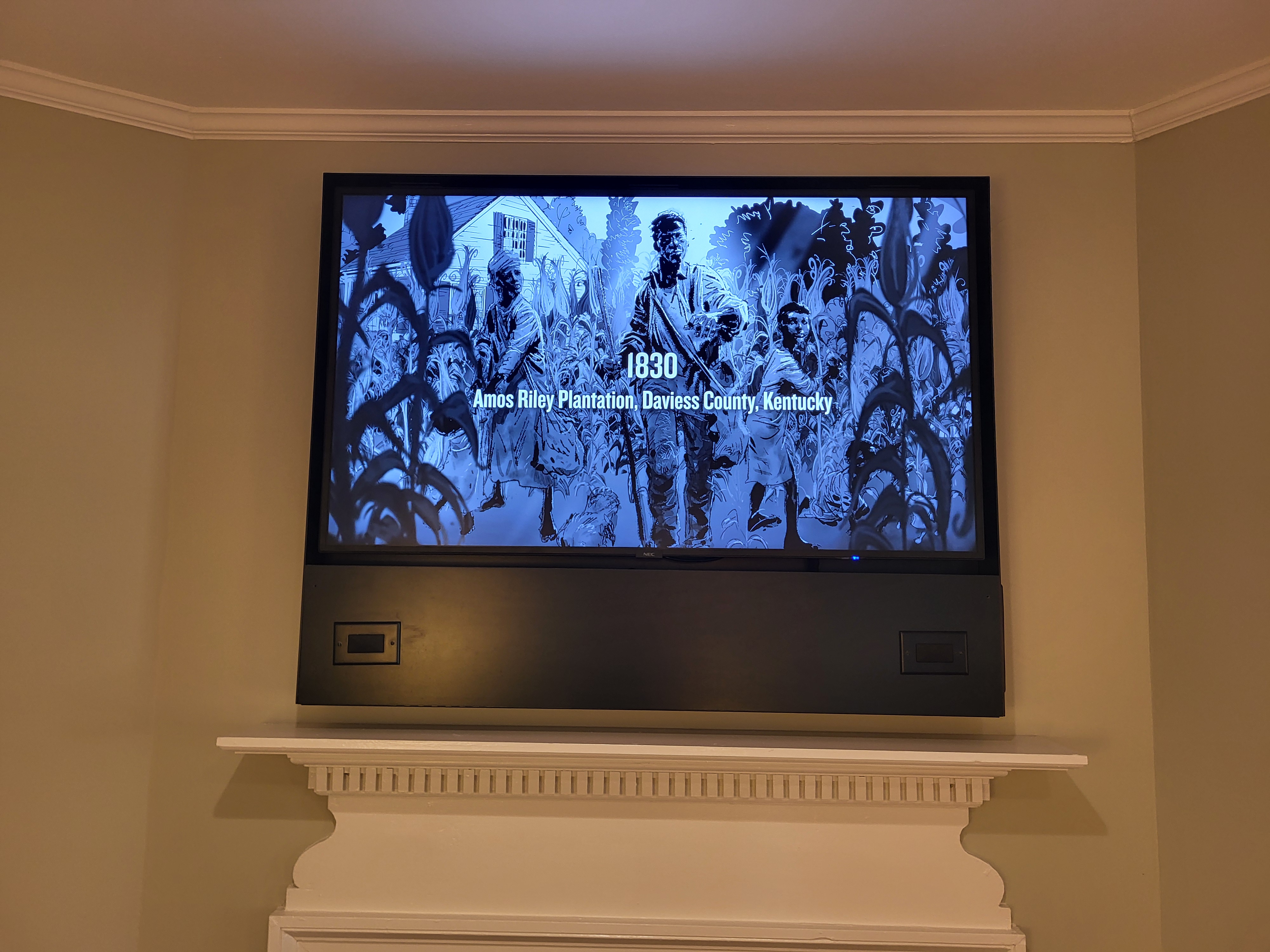
After the video, I met a staff member outside, who asked me if I had any questions about anything in the video, then explained the rest of the grounds (and I think the history of the land itself, but that might have come later). I then moved on to the farmhouse, which contained the displays. The first three rooms each shared more details about Henson’s life. Quotes from Henson’s biography were presented alongside narrative history, as well as the powerful Baker artwork mentioned above. Before and after every room, the staff member on duty checked in with me, asked if I had questions, then gave me some info about the next room. I’ve gotta say, I’ve never encountered such diligent and attentive museum staff. Maybe it’s boredom because so few people come through at a time, but I thought it was great.
The last of the interior rooms had exhibits about Henson’s legacy. This included lots of material about his impact on Beecher Stowe and Uncle Tom’s cabin, how he handled the fame, and how readers reacted both positively and negatively to the story. I was especially interested in all the material explaining how the idea of an “Uncle Tom” has been weaponized and warped over time by various groups. In my last conversation with the staff member, we discussed the fact that Henson returned to the farmhouse many years later along with the PRESIDENT OF THE UNITED STATES OF AMERICA, because that’s how important and famous Henson was. And the ex-enslaver’s wife (widow?) was like “Whoa you’ve got fancy clothes now!” I asked if there was any record of how the lady felt about Henson’s fame, etc. She wasn’t aware of any documentation on that, but said that she probably didn’t even realize what was going on with Henson because she was busy being miserable since her own life had gone pretty downhill (what with her husband being a useless drunk who sucked at everything, and abolition depriving her of her free labor). It took all my power not to spew out some obscenities as I tried to explain my thoughts, but I ended with, “Well, whatever- she’s dead now.” The staffer nodded in agreement. She was great.
After seeing the internal farmhouse rooms, I walked around to a separate kitchen that was attached to the building. This was, of course, where a lot of the enslaved people would have worked and some would have slept. There was some material here about what life was like for the workers, which was about as depressing as you’d imagine. I was a little distracted during this part because I was in the room with the only other museum patrons; an overwhelmed grandmother with 2 kids whose attention spans were non-existent, and the kids slid behind the rope and were stomping around on the historic dirt floor as the grandma begged them to get out. Obviously kids being little shits has nothing to do with the museum itself, but it was pretty crazy to watch.
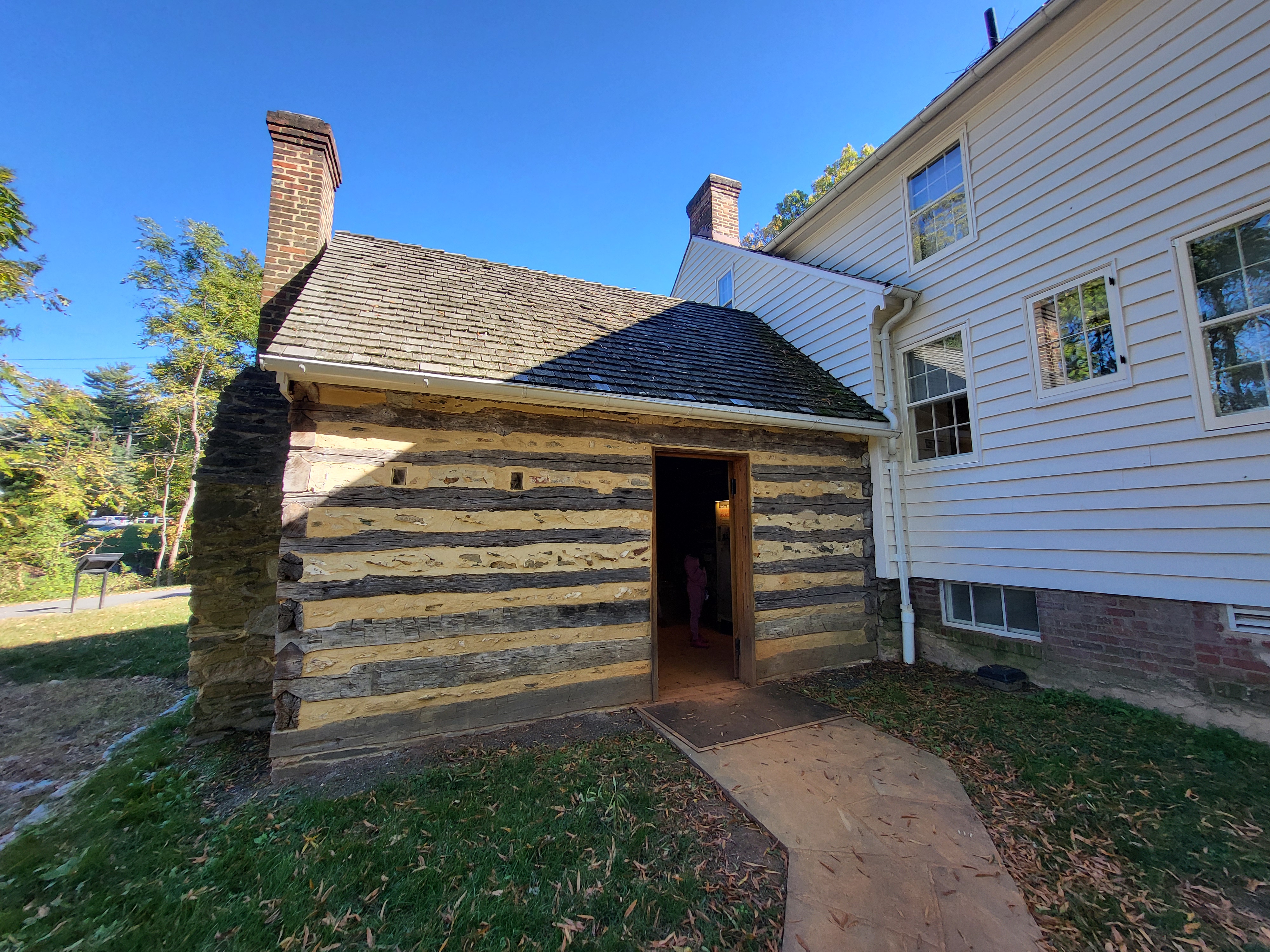
Afterwards I wandered along the path past the dig site (nothing to see there- it was all covered by a tarp), then headed back into the gift shop to pee and to buy Henson’s book. I’ve been holding off on writing this review until I’d read the book (which I did this week) in case it colored my museum review at all. Well, it didn’t affect anything I wrote here really, but here’s a link to that book review if you’re interested:
Bottom line, this museum is GREAT for anyone who loves history and happens to have an hour or so to kill in Montgomery County. Is it worth traveling for? Hmm… If you’re traveling from out of town, it’s not worth coming in for just this. But it’s not far off from 270, so if you’re heading in or out of DC from that direction, it’s totally worth tacking on a little bit of extra travel time to stop by. If you’re in Montgomery County already, though, then this is a total MUST SEE. Best small museum I’ve visited all year!
 Helga without the H